Breaking in the Bertazzoni with Osso Buco

When our $600 gas range, purchased twelve years ago during our university student years and selected because it was the absolute cheapest gas option we could find, decided to start taking one hour to heat to barely 300 degrees, we questioned the sense in fixing it. It seemed like the perfect moment to seize the opportunity and go shopping! Off we went with dreams of Wolf and Viking, paired with the reality that those were beyond our budget comfort zone. We thought we would settle for a Kitchen Aid, and then we saw it. The Bertazzoni.

No bells and whistles. Beautiful timeless design. Really quite affordable compared to its Wolf and Viking companions. Built to last forever, to live in an old Italian country house, and to be passed down to future generations. We were sold on the pretty, functional, old world beauty.

I was giddy with excitement when the lovely Italian appeared in my kitchen last weekend, and it has been cooking romance ever since. It seemed only appropriate to break it in with a proper Italian Sunday dinner, and so with hopes to try out everything from the range top to the oven, the decision was made easy. Osso Buco with truffle honey polenta and steamed asparagus with Parmigiano Regiano.

I called upon a tried and true recipe from the NAIT Culinary Arts “Tour of the Mediterranean” class that Cream and I attended a couple of years ago, and it did not disappoint. This classic veal shank stew is tender and rich with red wine, tomatoes, fresh sage, garlic, and onion, and it falls apart the way only a dish that slow cooks can. If you are searching for elusive veal shanks in Edmonton, The Italian Centre Shop stocks them in their frozen section. And if you are looking for the perfect vessel, I always reach for the jewel of my kitchen, the Le Creuset French Oven. Worth every penny, it gets used more than any other pot or pan in my cucina. With a few recipe additions and modifications of my own, this Osso Buco was a perfect Sunday dinner paired with a crusty loaf from the Treestone Bakery and followed by Duchess Bake Shop treats.

Here it is modified to generously serve two, or double it to serve four.

Osso Buco

2 veal shanks
2 tbsp olive oil
2 tbsp butter
1/4 cup flour
1 large onion, finely diced
1 large carrot, finely diced
1 celery stalk, finely diced
2 large garlic cloves, minced
1/2 bunch Italian parsley, minced
1 – 28 oz can of San Marzano tomatoes, hand crushed with juice
1 sprig of fresh sage
1 bay leaf
1/2 cup beef stock
1/2 cup good red wine (I like a nice Italian Primitivo)
Parmigiano Regiano rind (a nice addition if you have one)
kosher salt to taste
fresh ground pepper to taste

Preheat oven to 350 degrees.

Salt and pepper the veal shanks and dip them into the flour so that they are well coated. Shake off excess flour. In your large French/Dutch oven, or a large heavy bottomed cast iron pan or skillet, heat 1 tbsp each of butter and olive oil. Sear the shanks in the hot pan for 4 to 6 minutes until golden brown on both sides. Remove and set aside.

In the same pan heat the remaining butter and olive oil. When heated, add the onion, carrot, celery, garlic, and Italian parsley. Saute for 10 minutes until soft.

Next add the tomatoes, sage, bay leaf, beef stock, wine, Parmigiano rind, kosher salt, and fresh black pepper. Cook over medium heat for about 15 minutes.

If using a French/Dutch oven, nestle the veal shanks into the vegetable mixture and cover. Or if using a roasting pan, put a layer of the vegetable mixture on the bottom, add your veal shanks, cover with remaining vegetable mixture, and then cover with foil.

Bake in a 350 degree oven for 3 hours (or more for extra tenderness). Check the pan from time to time to ensure that it doesn’t dry out. Add a little more wine if required. Remove Parmigiano rind and bay leaf before serving.

I like to serve it over truffle honey polenta (see Cream’s last post on perfect polenta and mix in a dollop of honey and a tablespoon or more of truffle oil to taste before serving), and steamed asparagus with a drizzle of olive oil, fleur de sel, and a generous shaving of Parmigiano Regiano. And don’t forget to dip your crusty bread into the marrow.

Finito.

Tags: , , , ,

Corn-fed and Happy

Posted by cream on February 21, 2010
from the apron of... / 1 Comment

My most coveted cookbook right now is Mark Bittman’s How to Cook Everything.
When The Minimalist comes up in my news feed, I know I’m in for an informative treat.
A few months ago I tried his fear-less polenta, and it immediately became a happily recycled recipe.  It’s served as a base for chicken cacciatore, eggplant parmesan, and a chickpea stew.  It’s also become a savoury substitute on my frequent oatmeal-for-dinner nights.

As polenta was brought up again this week in Bittman’s column and a good friend recently shared a tasty recipe on her new blog, I thought I would mention my success with this recipe.  I prefer a higher ratio of milk than he calls for and I’ve tended to add more liquid during the cooking process.  And even when finishing with truffle oil… lots of butter to finish as suggested.

Polenta Without Fear
By Mark Bittman

4 servings

For creamy, soft, mouth-filling polenta, stir in butter and Parmesan — the more the better. If you want something more flavorful but still a little austere, add herbs, like marjoram or thyme, along with a handful of parsley or basil, and a couple of tablespoons of good extra virgin olive oil. For polenta firm enough to grill, broil or sauté, cook it until the creaminess is gone and it starts to pull away from the sides of the pot, then turn it out onto a plate or a board and let it cool until firm.

1 cup milk (preferably whole milk)
Salt
1 cup coarse cornmeal, preferably stone-ground
Freshly ground black pepper, to taste
2 to 4 tablespoons butter or extra virgin olive oil
1/4 cup or more freshly grated Parmigiano-Reggiano, to taste, optional
1.   Bring milk to a boil with 2 cups water in a medium saucepan and add a large pinch of salt. Adjust heat so liquid simmers. Add cornmeal in a steady stream, whisking as you do to prevent lumps. When it has all been added, let mixture return to a boil, then turn heat to low. Polenta should be just barely simmering.
2.  Cook, stirring occasionally and being sure to scrape sides and bottom of pan, for 15 to 20 minutes, until mixture is creamy and cornmeal tastes cooked. If mixture becomes too thick, whisk in some water, about 1/2 cup at a time.
3.   Taste and season polenta as necessary with salt and pepper. Take pan off stove, stir in the butter or oil and the cheese if you are using it, and serve, passing more cheese at the table if you like.

Tags:

Holy bagels, Batman!

Posted by cream on February 10, 2010
from the hands of cream and sugar..., from the pages of... / 5 Comments

This post is pretty simple.  I made bagels. I made bagels.

What more is there really to say?

Let’s try this:

I recognized the specialness of bagels when I was about eight years old on my first family visit to Ottawa.  My aunt made a special trip to Bagel Bagel near the Byward Market for bagels and lox one morning.  It was then I acquired a taste for cream cheese and fell in love with the donut-shaped baked good.  Most of the Edmonton bagels I ate were buns with holes—too airy, not chewy. I fondly remember The Bagel Tree.  But that closed down.  There were years with paltry substitutes from The Great Canadian Bagel, but then Dr. Atkins rained on that parade.
I did not have a decent bagel again until I moved to Toronto.  My bagel shop of choice was Kiva’s.  Grad studies’ stress meant that I was a big fan of the oversized poppy twister.
In the last few years, I’ve been lucky to have friends bring me Fairmount bagels from Montreal on a regular basis.  And now in Vancouver, I have both Solly’s and Siegel’s to rely on for stocking my freezer with real bagel goodness.

And by real, I mean boiled.  Not misted, not glazed.  Boiled.

So, why try making my own when I’m now essentially in Edmontonian bagel heaven?
I don’t really know.  I just did it as a February baking project.  And after taking that baking course at NAIT last winter, I knew I could do it.

The results?

Wonderful.

But… a lot of work.  Time, elbow grease, patience, research.
Because of the number of people who have blogged about baking bagels via Peter Reinhardt’s famous baking book, I decided I would use that recipe.  Lots of blogging means lots of information on pitfalls, tips and tricks.
I read that a bagel is a bagel because of 1) the boiling and 2) the flour used.  High protein/gluten flour gives bagels their distinctive chewiness.  A bagelry will often have flour of a higher gluten percentage than bread flour.  Where did that leave me?  Adding vital wheat gluten to all purpose flour.  I don’t have the space for a five kilo bag of bread flour, but I do have the space for a small bag of gluten (found at both Save-on Foods and Whole Foods).  Information on how much to add was inconsistent, but I went with one teaspoon for every one cup of flour.
The dough was stiff.  Too stiff for a Kitchen Aid and almost too stiff for my weak arms.  But I ploughed through.  All by hand.  All on my little counter.
It’s a two-day affair, with about four to five hours needed on the first day, and about one hour on the second.  I referred most strongly to the notes I read on The Fresh Loaf (where recipe is from) and Smitten Kitchen.

Peter Reinhardt Bagels
Makes one dozen bagels.

Sponge:
1 teaspoon instant yeast
4 cups bread flour*
2.5 cups water

Dough:
0.5 teaspoon instant yeast
3.75 cups bread flour*
2.75 teaspoons of salt
2 teaspoons of malt powder (or 1 tablespoon malt syrup or 1 tablespoon honey*)

1 tablespoon baking soda
Cornmeal
Toppings (sesame, poppy seeds, etc)

Day 1:

1. Stir the yeast into the flour in a large mixing bowl. Add the water and stir until all ingredients are blended. Cover with plastic wrap and allow to rise for two hours.

2. Remove the plastic wrap and stir the additional yeast into the sponge. Add 3 cups of the flour, the malt powder, and the salt into the bowl and mix until all of the ingredients form a ball. You need to work in the additional 3/4 cups of flour to stiffen the dough, either while still mixing in the bowl or while kneading. The dough should be stiffer and drier than normal bread dough, but moist enough that all of the ingredients are well blended.*

3. Pour the dough out of the bowl onto a clean surface and knead for 10 minutes.*

4. Immediately after kneading, split the dough into a dozen small pieces around 4 1/2 ounces each.* Roll each piece into a ball and set it aside. When you have all 12 pieces made, cover them with a damp towel and let them rest for 20 minutes.

5. Shaping the bagel:  punch your thumb through the center of each roll and then rotate the dough, working it so that the bagel is as even in width as possible.

6. Place the shaped bagels on an oiled sheet pan, with an inch or so of space between one another (use two pans, if you need to). If you have parchment paper, line the sheet pan with parchment and spray it lightly with oil before placing the bagels on the pan. Cover the pan with plastic and allow the dough to rise for about 20 minutes.

7. Test the bagels:  Drop one of them into a bowl of cool water: if the bagel floats back up to the surface in under ten seconds it is ready to retard. If not, it needs to rise more.  When ready, place the pan into the refrigerator for the night.  The dough can rest in there for up to two days.

Baking Day:

8. Preheat the oven to 500 degrees. Bring a large pot of water to a boil. Adding one tablespoon of baking soda to the pot to alkalize the water is suggested to replicate traditional bagel shop flavor.

9. When the pot is boiling, drop a few of the bagels into the pot one at a time and let them boil for a minute. Use a large, slotted spoon or spatula to gently flip them over and boil them on the other side. Boil the tops first.

10. Before removing them from the pot, sprinkle corn meal onto the sheet pan (you can keep parchment from overnight rest). Remove them one at a time, set them back onto the sheet pan, and top them right away, while they are still slightly moist. Repeat this process until all of the bagels have been boiled and topped.

11. Once they have, place the sheet pan into the preheated oven and bake for 5 minutes. Reduce the heat to 450 degrees, rotate the pan, and bake for another 5 minutes until the bagels begin to brown.*  Remove the pan from the oven and let cool for at least 15 minutes.

Notes:

Sponge and dough—I wanted whole wheat bagels, so I made the following substitutions for the all purpose flour:  2 cups of whole wheat flour in the sponge, 1 cup of whole wheat + 0.5 cups oat bran in the dough.  I also added 0.5 teaspoon of cinnamon to the dough.
Vital wheat gluten—I added one teaspoon per cup of flour and REMOVED 1 teaspoon of regular flour (I was worried the dough would be too dry otherwise.)
Flavouring—I added honey.
Step 2—I ended up having to add a few tablespoons of water in the mixing process to get the dough smooth.
Step 3—I kneaded for 15-20 minutes.
Step 4—I made smaller bagels, ~100 grams each, and got 16 out of this recipe instead of 12.
Step 11—After turning the heat down, my bagels baked for an additional 8 minutes, not 5.

I have to say that I  am quite proud of myself for pulling this off.  A Sunday brunch of fresh bagels from your own oven is a beautiful thing.  I had my first toasted one yesterday and it was perfect.   So chewy I could cry.

My oven did that!

Tags:

I smell Saigon in my salad.

Posted by cream on February 02, 2010
from the apron of... / No Comments

It’s been just about a year since my trip to Vietnam.  With friends there, I think of it often.  And fondly.  I haven’t tried any more Vietnamese recipes since moving to Vancouver, but I haven’t much tried any recipes, really.  Vancouver’s dining options make it so easy for me not to cook.   Especially when so many of the options are so good.

But anyway, back to my story.  The grey of Vancouver is like the cold of Edmonton.  It gets to you in January and you long for something else.  Like Vietnam in February.  I’ve had some bare bones Vietnamese here—dodgy pho et al—like I got at home.  But, what I’ve been craving to wash away the Vancouver grey is the colour and perfume of the fresh food that embraced you every day on the streets of Vietnam.

I caught a little whiff of that tonight when at Chau Kitchen and Bar.  Although not really “authentic” Vietnamese, I could taste Vietnam.  I liked what I tasted.  A lot.

Two of us shared four dishes:  papaya salad, pork and mint salad rolls, jungle vegetable curry, and caramel pork.

I will order all again and have a number of other dishes I would like to try.  The pork was almost the same as the version I had when in the Mekong Delta.

Thanks to Chau, I can happily say ciao to January.
(I’m sorry, I had to.)

Along the Mekong.

Chau Kitchen and Bar
1500 Robson St
Vancouver

Chau Kitchen & Bar on Urbanspoon

Tags: , ,

This is how I compost.

Remember how I loved my Momofuku Milk Bar experience so much?

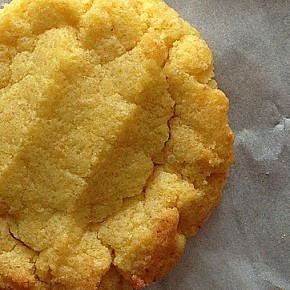
The Momofuku Compost Cookie

I finally got around to trying my hand at recreating the Compost Cookie experience.
Verdict:  failure.  But, not because my cookies were icky.  They just did not taste like the original.  But given that I have a small apartment oven, made up my own recipe and am not a pastry chef of great provenance, I done just fine.

I wanted to keep my first attempt simple.  No crumbs or grounds.  (I also know too many non-coffee drinkers.)  Butterscotch chips can be hard to come by, so I added peanuts.  Next time, I would add more of everything.  I had about two cups of add-ins, but I easily could have increased that to three.  Another “aw, shucks” moment came when I bit down on decidedly uncrisp potato chips and pretzels.  I have no clue how the ones in the original stay so crispy!

In any case, what follows is one of my favourite drop cookie batters—note the lack of white sugar.  To ensure I always get chewy cookies, I underbake by just under a minute.  Freezing is fine.  I actually love cookies just out of the freezer.  After a defrost of about ten minutes, I am in cold dough heaven…
(Remnants of my childhood eating English Bay batter out of the fridge.)

My Compost Cookie

2/3 cup melted butter
2 cups lightly packed brown sugar
2 eggs
2 tablespoons hot water
2 2/3 cups all-purpose flour
1 teaspoon baking powder
1 teaspoon baking soda
1/4 teaspoon salt
2-3 cups add-ins (such as chocolate, nuts, pretzels, potato chips)

Pre-heat oven to 375 degrees.
In a large bowl, beat melted butter, brown sugar, eggs and hot water until smooth.
In another bowl, whisk together flour, baking powder, baking soda and salt. Stir into butter mixture until blended.
Stir in add-ins. Drop onto ungreased/parchment cookie sheet.
Bake 8 to 10 minutes. Let cool 1 minute, then move to wire rack.

Tags: , ,

A dip into the sweet and simple

I was fourteen when I went to Italy.  At the time, I could appreciate little more than gelato, cobblestone streets and glimpses of David’s naughty bits.  My true romance with Italy did not fully hit until I started learning the language in university.  So since then, I have longed to go back.  As this longing has grown and my palate developed, I can now understand why I favour Italian cuisine so much:   simplicity.  And not in the sense that it’s not worth going out for because you can make the dishes at home.  Good Italian food is not based around tasteless tomatoes, wilted basil, and mushy pasta…  crimes often committed by both the professional and home cook.  Good Italian food is the best ingredients combined simply to taste amazing.

Flipping through the pages of a Christmas present reminded me of this.  The recipes in David Rocco’s Dolce Vita are all based on only a handful of ingredients.  The sweet life is such because it’s not fussy.  It’s bread dipped in olive oil, biscotti in vin santo.  That’s amore.

When tasked with a dip for New Year’s Eve, I looked to David for inspiration.  I tinkered a bit and was proud of the results.  Creamy, cheesy, SIMPLE.   Quite cozy on the snack table with the other treats and the midnight bubbly.

Happy New Year!

Ricotta Dip
1 454-g tub of ricotta cheese
Small log of goat cheese
3 cloves of garlic, minced (roasted is preferable)
Zest of one lemon
2 teaspoons of extra virgin olive oil
Salt and black pepper, to taste

Mix all ingredients well and smooth into serving dish or bowl.  [Can be chilled in advance at this stage.]
Before serving, drizzle with more olive oil and top with more s&p.

Tags: ,

Christmas Pudding, Butter Tarts, and Sweet Irene

Posted by sugar on December 20, 2009
from the hands of cream and sugar... / 3 Comments

I love Christmas. The baking, the smells, the sounds, and that warm nostalgic feeling that always creeps in. On a cold a snowy Edmonton day, while listening to the musical styling of Bing’s “White Christmas”, we decorated the tree. A fresh and lovely smelling pine, little white lights, peacock feathers, the little 1950’s flower rings on the lights that were once on my Dad’s Christmas tree as a child, and all the ornaments that I have been collecting since my very first Christmas. My sweet mother always had an ornament for each of us to mark each year. My favourite remains the little wiry doll with matted auburn hair in a blue gingham dress from my first Christmas in 1974 . She goes on the tree first every year. The little tulle fairies circa 1910 that were once on my Grandmother’s tree run a close second, and hanging them on the tree this year I was reminded that this will be our first Christmas without her.

16

Lovely Irene was a fiercely independent, joyful, strong, and talented woman who lived a full 99 years of spitfire life. An outdoors woman with a love for a nature, a nice glass of rye at happy hour, and a dirty joke or two, she was a light in our lives. Irene was a meticulous cook with many gifts in the kitchen and a panache for entertaining. As we said farewell to her this year, we carried on a tradition that ended many a tipsy gathering at her house where the neighbours would roll down the alleyway still singing “Goodnight Irene” after a night of delicious food, drink, and company. It was bittersweet.

So this year, it is with extra gratitude that I pull out her little hand written recipe cards to prepare the things that taste like Christmas to me…things that were always made with love by her hands. The first is her Traditional Christmas Carrot Pudding with Vanilla Sauce. This rich, sweet, spiced, steamed carrot cake is so tender and delicious. It warms the air in the house with smell of all things Christmas. My second essential is Butter Tarts…made with currants and NEVER raisins, loads of butter, and a touch of cream. They are sweet and delicious and magically disappear. This year as I grate the carrots, and whip the butter, I know her spirit is near.

Christmas Carrot Pudding with Vanilla Sauce

For the Pudding:

1 cup grated raw carrot

1 cup grated raw potato

1 cup flour, plus 1 tbsp

1 cup sugar

3/4 cup raisins

1/2 cup currants

1/2 cup dried cherries

1/2 cup butter

1/2 tsp ground cloves

1/2 tsp ground nutmeg

1/2 tsp cinnamon

1 tsp baking soda

2 large cleaned and buttered tin cans ( I use large tomato cans)

Cream the butter and sugar to a smooth paste. Add the grated carrot, half of the grated potato, and mix well. In a separate bowl, mix dried fruits and the tablespoon of flour to lightly coat the fruit, and add it to the first mixture. Sift the one cup of flour together with the spices and add to the mixture blending lightly. Dissolved the baking soda in the remaining half cup of grated potato and add it to the mixture last, lightly combining all the ingredients.

img_5345

Fill buttered cans with batter leaving an inch and a half at the top. Cover with parchment and tie tightly with string. In a large pot ( I use a pasta pot) boil water so that the cans are just submerged at the bottom, cover tightly, and steam for 3 hours or more.

img_5350

img_5352

For the Vanilla Sauce:

2 tbsp butter

2 tbsp Flour

1 1/4 cups hot milk

dash of salt

3 tbsp Sugar

3/4 tsp vanilla extract

In a small saucepan, melt butter and whisk in flour over medium heat. Do not brown the butter or flour but cook gently for a minute. Add hot milk and gradually stir over direct heat until mixture thickens. Add sugar and salt. Cover tightly and cook on top of a double boiler for 10 minutes. Remove from heat and add vanilla.

img_5354

To serve:

Spoon warm cake out of tins into bowls and top with the warm vanilla sauce!

img_5464

Butter Tarts

1/3 cup butter

1 cup brown sugar

2 tbsp cream

1/2 cup currants

1 egg, beaten

1 tsp vanilla extract

24 tart shells

img_5301

Pre-heat oven to 450 degrees. Mix butter and brown sugar together. Add cream, currants, egg, and vanilla and combine. Spoon into pastry about 3/4 full. Bake at 450 degrees for 8 minutes, then reduce heat to 350 degrees and bake until pastry is golden brown. Cool and serve.

img_5318

“Irene good night, Irene good night,
Good night Irene, good night Irene,
I’ll see you in my dreams.”

irene-1936

Tags: ,

What plain spaghetti looks like when you’re in your 30s.

Posted by cream on December 13, 2009
from the apron of... / No Comments

On a day like today, where Vancouver has a dusting of snow and Edmonton is in the midst of a deep freeze… I am quite happy where I am, thank you very much.
But cool temperatures fill me with warm memories of people I love and miss.  And cool air still puts me in the mood for food that comforts.

“Plain spaghetti” as a child meant cooked noodles bathed in salted butter and dusted with Kraft parmesan from the green shaker.  As an adult, it means spaghetti aglio e olio—garlic and oil.  It’s not a difficult endeavour and besides knowing that chilies, pecorino and Italian parsley are involved, it’s quite literally what it proposes to be.

aglioolio

One of the great things about Edmontonians is that we tend to rally around hometown heroes and heroines when they do good so that they continue to do good.  Daniel Costa is a great local chef who made me crave Da Capo salads and pizza and has recently upped the ante with pub food at Red Star.  I used his recipe for this dish, and included a splash of white wine as he suggested.  Although I did not use anchovies.  Delicious and comforting all the same.

Stay warm, Edmonton.

Tags: ,

This Oak has strong roots

Posted by cream on November 27, 2009
from the kitchens of... / 1 Comment

Bigger cities mean more people.  Often, you’re also looking at more people in a small area; more bustle.  More bustle means more running into people, rubbing shoulders, more earshot.  I like that.   Especially at restaurants.  It reminds me of New York.   So, while here in Vancouver I’ve particularly enjoyed meals at small restaurants that are too tight and naturally, too loud.   Right or wrong, I attach the buzz of such places to the buzz of urbanity and want to return again and again.  That is why I bring up La Quercia (The Oak) again.
Small, tight, loud.
Excellent food—that happens to be Italian.

For my first visit, my party and I ate our way through 9, n-i-n-e, courses.  This time, I noticed you could do a 5- or 9-course family style set menu. Remembering my previous food baby… my dining date and I chose the 5-course menu.   As the kitchen takes your food allergies and aversions into consideration, what follows is the perfect fresh and seasonal menu created just for our table.  I noticed that the table over did 9 courses and had none of the same dishes as us.  Methinks that’s pretty cool.

Some days I dream about those perfect soft, but supportive pasta pillows.  Other days I want to savour little spoonfuls of that light-as-air soufflé.  All days usually require a moment where I want to twirl al dente spaghetti.

House-smoked trout

House-smoked trout

Parmigianno souffle

Parmigianno souffle

Fennel salad with walnuts and blue cheese

Fennel salad with walnuts and blue cheese

Spaghetti ai frutti di mare

Spaghetti ai frutti di mare

Gnocchi with walnuts and gorgonzola

Gnocchi with walnuts and gorgonzola

Ruby trout with chanterelle sauce

Ruby trout with chanterelle sauce

Saffron and quince tart, chocolate mousse, tiramisu

Saffron and quince tart, chocolate mousse, tiramisu

Dreams can become reality:  I already have another reservation.

La Quercia
3689 West 4th Avenue
Vancouver

La Quercia on Urbanspoon

Tags: , ,

Job perks

Posted by cream on November 18, 2009
from the kitchens of... / 1 Comment

I’ve had the privilege of having some pretty terrific jobs the past few years.  Terrific not only in the fact that experience brought me to an exciting opportunity here in Vancouver, but because I’ve met some amazing people and lifelong friends along the way.  I’m happy to say that I’ve lucked out again in this regard.
To introduce me to a popular dining spot, some coworkers took me out to Baru Latino Restaurante one Friday eve.  I can’t say much more beyond the food was very good and the house specialty-ceviche-was outstanding.  Oh yes, and Vancouver Magazine’s recommendation of last year to try the arepa con chorizo was a good one.

Plaintain, cassava and yam chips

Plantain, cassava and yam chips

Baru ceviche

Baru ceviche

Arepa con chorizo

Arepa con chorizo

Guava quesadilla

Guava quesadilla

Why can’t I say much more?  Because I was too busy enjoying an evening out with new friends to pay too much attention to the food… beyond taking photos with my sangria goggles on, that is.

Baru Restaurante Latino
2535 Alma St
Vancouver

Baru Latino on Urbanspoon

Tags: , ,