cake

Friends & Neighbours: Innovation trumps tradition with the easiest summer dessert

Posted by cream on July 18, 2010
from the hands of friends & neighbours / 2 Comments

growing up in the philadelphia area, and having a birthday that falls at the beginning of summer, icebox cake was a favorite dessert in the warmer months, and a frequent request of mine for a birthday cake.

both my mother and father grew up eating this easy to make treat, and thus i imagined that it was a staple in most households. as an adult, I have found this to be far from the truth. many, if not most of my fellow dessert-lovers have not even heard of this delicacy.

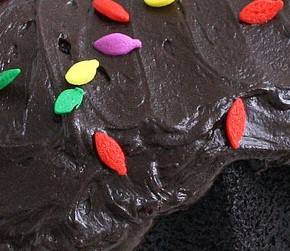
the traditional icebox is made with chocolate wafers and whipped cream. i found more or less traditional instructions here. (though i personally don’t add vanilla to my whipped cream, and certainly would never never include m&m’s.)

my father’s very new england side of the family were purists — simple heavy cream, whipped and then sandwiched between wafers. my mother’s slightly less traditional clan showed their brash new york ways by following the same traditional recipe as my father’s family…. and then smothering the final product with a healthy dose of chocolate sauce.

many a summer’s evening meal has ended with family debatiing the pros & cons of this condimental addition. personally, i am not a subscriber to the theory that “there’s no such thing as too much chocolate,” and will admit to falling on the side of my paternal ancestors on at least this issue. despite having made new york city my home, i retain this vestige of good old w.a.s.p.-y restraint.

today was a perfect day to revisit summer memories with a little easy assembly and looking forward to a delicious dessert after a great bbq dinner…

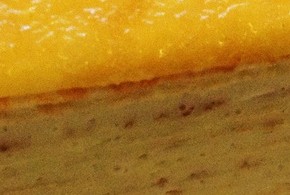
not finding the traditional nabisco famous chocolate wafers in the grocery store of my decidedly non-w.a.s.p.-y brooklyn neighborhood, i made an interesting discovery… ginger flavored wafer cookies!

i decided to take the plunge, and for the first time in my life, make a non-chocolate icebox cake.

my husband was skeptical. i wouldn’t dream of calling home to let my parents know what i was up to…

but in the end… I believe that i have started a new offshoot in the family icebox cake making tree. The ginger and cream combo is perfection, and take an already light dessert to a place that is hard to resist, no matter how many burgers have preceded it.

i don’t keep chocolate sauce in the house, so i can’t say for sure, but i am quite confident that in this case, the addition would be quite welcome. since it wouldn’t be an overdose of chocolate, i think the richness would be a great companion to the spiciness of the ginger. next time, we’ll know for sure.

so, there you go… innovation sometimes trumps tradition, and in so doing, may even solve a meal ending family debate.

and it couldn’t be easier… make one yourself! and let me know if there are any other new flavors on your horizon.

Thanks to our friend Jessica for Cream & Sugar’s very first guest blog post.
Please visit her blog, is it the first, for fun musings on fashion and style.

Tags: , ,

Tres leches? Très bien!

Posted by cream on May 11, 2010
from the apron of... / 5 Comments

I do not question the three.  It could be two. Even one.  But, whatever.
I also do not question its origins.  Just like Southern banana pudding was not created by Jell-O, I won’t believe completely that tres leches (three milk) cake was developed by the likes of Nestlé… even when considering the number of cans used in this recipe.

Post-baking, post-poking, pre-milk

My first taste of the mysterious three milk (WHY THREE?!) cake was at El Rancho in Edmonton.  In their early days, the dessert menu usually only consisted of flan and tres leches.  Both coming dressed with a small swirl of canned whipped cream and a maraschino.  Having had one burnt syrup flans too many in my Central American restaurant journeys had me lean to tres leches one night.  Like, but not love.  I’m not a cake girl, so my attachment was very tentative.  But the bread pudding/custard-like texture made me return to it now and again.

Post-milk, pre-soak

For a casual dinner party chez moi, I needed to think of a casual Mexican dessert to accompany my quesadillas and tortilla soup.  Nothing says casual like cans, right?
My aversion to cake made me nervous as I started baking.  The toothpick test is sound, but I still always get thrown off by the browning.  What came out of the oven was a lovely sponge.  Extra golden from those crazy eggs.    As I soaked the sponge with the milks, I anticipated some magic.  The eggy aroma of the cake surely meant custard action would ensue overnight as it married with the milks.  Please, oh please.  That would move like to love.

Now I know that seems like an extraordinarily large dollop, but they don’t call me Cream for nothing.  As you can see, the cake indeed is a sponge.  With every depression of your fork tines, there is some weeping that reminds you of its namesake, but no giant pool.  My soup was pretty tasty, but this was the star of the meal.  As a dessert in the style of other soaked cakes like trifle or tiramisu, you often go back digging with a spoon for just one more bite.

Or piece.  Which I did shortly after my guests left.
If I hadn’t given them some to take home, it definitely would have been a tres tres leches night. Wuh-wuh.

Tres Leches Cake
adapted from Martha Stewart’s Everyday Food

Serves 6

Unsalted butter, room temperature, for baking dish
3 large eggs, separated
0.5 cup sugar
0.5 cup all-purpose flour, sifted
0.5 can (14 ounces) sweetened condensed milk
0.5 can(12 ounces) evaporated milk
0.5 cup whole milk
0.75 cup heavy cream
0.5 tablespoon confectioners’ sugar
0.5 teaspoon vanilla

Preheat oven to 325 degrees. Butter a 8-by-8-inch glass baking dish. In a mixing bowl, beat egg yolks and sugar on high speed until light and fluffy. In another bowl, beat egg whites to soft peaks. Using a rubber spatula, fold whites into yolks until almost combined. Gently fold in flour (do not overmix).
Spread batter in prepared dish. Bake until golden and pulling away from sides of dish, 20 to 25 minutes. Poke many, many holes in cake with a toothpick. Cool cake 20 minutes.
In a medium bowl, whisk together the three milks; pour evenly over cake. Cover with plastic wrap; refrigerate overnight.
To serve, prepare topping: In a mixing bowl, whip heavy cream with sugar and vanilla to soft peaks. Chill cake and cut into squares; serve topped with whipped cream.

Tags: , ,

A Tale of Two Loaves: Part II

Posted by cream on April 16, 2010
from the apron of... / 3 Comments

If February’s project was yeast breads, then March’s turned out to be quick breads.

Having just told you that I wanted to avoid oil in my banana bread, I made an about face turn and made a loaf cake whose star player is olive oil.  From the famous olive oil gelato at Otto to an increased association with cakes, I’ve been wanting to try making a sweet with this traditional savoury.  I’ve said before that I like baking with Dorie Greenspan.  So when I came across her olive oil recipe, I was definitely intrigued and had a feeling that she wouldn’t let me down.

It’s definitely a cake and could be nicely accompanied by a citrus sorbet or quick glaze like Sugar’s Tartine loaf.  What’s nice is that the flavour of the olive oil balances out the sugar, so you don’t get a too-sweet cake.  And the lightness of the lime offsets the cake’s more dense texture.  It went over well in the office as a belated St. Paddy’s Day treat, so I heartily encourage you to try it this spring.  The colour (from the oil and my omega 3 eggs) clearly evokes a warm sunny day.

Extra Virgin Olive Oil and Yogurt Loaf Cake
c/o Dorie Greenspan

1.5 cups all-purpose flour
2 teaspoons baking powder
Pinch of salt
1 cup sugar
Finely grated zest of 1 lime
0.5 cup plain whole milk yogurt
3 large eggs
0.25 teaspoon pure vanilla extract
0.5 cup extra virgin olive oil

Centre a rack in the oven and preheat the oven to 350 degrees. Generously butter a loaf pan, place the pan on a lined baking sheet and set aside. Whisk together the flour, baking powder and salt and keep near by.

Put the sugar and zest in a medium bowl and rub the ingredients together until the sugar is fragrant. Whisk in the yogurt, eggs and vanilla. When the mixture is well blended, gently whisk in the dry ingredients. Switch to a spatula and fold in the oil. The batter will be thick and shiny. Scrape it into the pan and smooth the top.

Bake the cake for 50 to 55 minutes, or until it is golden and starts to come away from the sides of the pan; a knife inserted into the center of the cake will come out clean. Cool on a rack for 5 minutes, then run a knife between the cake and the sides of the pan. Unmold and cool to room temperature right-side up.

Dorie says you can keep the cake at room temperature for at least 4 days or freeze it for up to 2 months.

P.S.  It’s not oily.

Tags: , ,

More Banh, Please

Vietnam still holds me.  I miss the food, I miss the weather, I miss the people, I miss the noise, I miss the energy.

So when an opportunity arises for me to somehow connect back to it, I grab on.


At the last book club meeting I hosted, we were discussing a book that took place partly in Cambodia.  And for my purposes, Cambodia is close enough to Vietnam to make a culinary cheat leap when deciding what to make for snacks.  The book does mention a character often eating a baguette sandwich… which of course is Vietnamese banh mi by any other name.  So really, I wasn’t cheating all that much.  And when I found the perfect recipe for a banh mi mise en place, the menu was shaping up perfectly.


banh-mi-mise-en-place


While the chicken was well flavoured from the marinade, the standout ingredients were the pickled carrots and fresh bread.  I kept to the recipe closely with the exception of the onions, daikon, lime (a member’s allergy caused me to use lemon), and the salad.  I marinated the carrots for about 6 hours and everyone raved about them.  I placed a special order at Cobs for the small baguettes.  They were all chewy, golden goodness.


 banh-mi


Unexpectedly, banh (loosely, bread/cake) became another theme of the evening.  While walking aimlessly one night in Hue, I decided to try a sweet I had seen a few times in display cases.  Simply labelled “banana cake,” it had the look of an upside-down cake; caramelized bananas atop a moist, white cake.  The flavour, however, was more like a bread pudding.  When I started searching for a recipe, I found that the cake I had tasted and had wanted to make for book club was called banh chuoi nuong.


Like any good bread pudding recipe, eggs and milk make over stale bread.  And like many good dessert recipes from tropical climates, coconut and banana have leading roles.


 making-banh-chuoi


After a few bites, you immediately understand why banh is such a widely used prefix in Vietnamese cooking.  Everything it touches turns delicious.


 banh-chuoi


Banh Chuoi Nuong


8 bananas

2 day-old/stale French loaves (not baguettes)

2 eggs

1.25 cups sugar

2 cups milk

2 cups coconut milk

4 tablespoons melted butter

1 tablespoon vanilla

0.5 teaspoon cinnamon


Slice bananas and mix with flour, 0.25 cup sugar, 2 tablespoons of the butter, and cinnamon.  Beat eggs with the remaining cup of sugar.  Then add coconut milk, milk, vanilla, and remaining butter.  Remove crusts from bread.  Slice into 0.5-inch slices.  Grease a 9-inch glass pie plate.  Quickly dip the bread slices in the egg mixture and lay the slices into the bottom of pan to create the first layer.  Squish bread down as much as you can.  Add half of the banana slices.  Repeat bread layer, squishing down again.  Finish off with the rest of the banana slices.  You may have leftover bread and banana slices.  Bake at 350 degrees F until golden, about 45 minutes.

Let cool completely.  Serve at room temperature.  A scoop of vanilla ice cream wouldn’t hurt it.


banh-chuoi-cut

Tags: , , , , , ,