bread

A Tale of Two Loaves: Part I

Posted by cream on April 15, 2010
from the pages of... / 2 Comments

Every time I go into Starbucks, the banana bread tempts me.  The moist fruit “bread” on the other side of the looking glass tricks me into thinking she might not be cake.
But, for all intents and purposes she is.  Made in some industrial kitchen and made to look like all the other slices of SB banana bread around the world.
I only give in when I’m at airports.  After an uncomfortable flight to/from who knows where, I want some familiarity.  I want some cake.

Not (yet) at a point where I bake a whole loaf of banana bread for myself, I found an excuse to bake one for others when some ladies were coming over for wine and conversation.
To the internet I went to search out a recipe that used butter and not oil.  I’ve found in the past that with quick breads (quick cakes?), oil can sometimes make things, well, oily.
Lo and behold, what do I come across? A recipe from The Best of Bridge.

Growing up in 80s Alberta usually meant your mother referred to either The Best of Bridge or Company’s Coming cookbooks for her cooking projects.  BoB seemed more for entertaining, CC for specific items (Muffins and More, anyone?).  I often remember flipping through my mom’s BoBs, comparing the pictures of the BoB ladies from year to year — Did she cut her hair? Did that one colour her hair? — and being transfixed by the handwriting script used in the books.  The non-sequiturs and jokes at the bottom of each recipe were always over my young head.  “Taxes are what old people worry about.”  At that time, a picture was not required for every recipe and olive oil was a fancy ingredient.

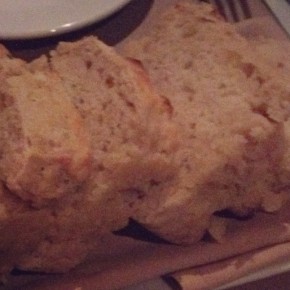
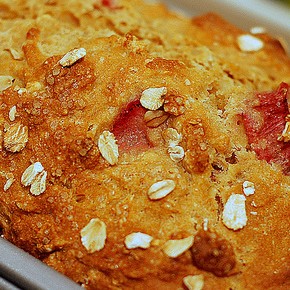
For these sentiments, my search would end at this “Best Ever” banana bread.  And pretty best ever it was.   A soft, dense middle.  A crunchy, sweet crust.  OTT with a slathering of soft butter.  The airport treat of my dreams.

Best Ever Banana Bread
Adapted from The Best of Bridge

0.5 cups butter
0.5 cup white sugar
0.5 cup brown sugar
1.5 cups mashed banana (about 3 very ripe)
2 eggs, well beaten
1.25 cups flour
1 teaspoon baking soda
0.5 teaspoon salt
0.5 teaspoon cinnamon

Preheat oven to 350 degrees. Cream butter and sugar until light and fluffy. Add bananas and eggs and beat until well mixed. Mix dry ingredients and blend with banana mixture, but do not overmix. Pour into a lightly greased loaf pan. Bake 55 minutes to 1 hour; test for doneness (toothpick inserted in middle comes out clean) and cool on rack for 10 minutes before removing from pan.

The difference between a tax collector and a taxidermist is the taxidermist leaves the hide.

Tags: ,

Single girl’s brioche

Posted by cream on April 04, 2010
uncategorized / No Comments

Pain au lait.  Poor man’s brioche, or in my case, single girl’s brioche.  Less butter not because of the price to my wallet, but because of the price to my hips.

My February project was bread baking. First came bagels, and then, pain au lait.  Because I eat so many bagels, making my own was a fun challenge. Making pain au lait was a nod to the wonderful sweet bread I ate while in Vietnam, specifically that at Pat a Chou in Ho Chi Minh City.

I had gone done a path to make brioche but while looking for a recipe, I was put off by how temperamental the dough sounded.  I’m a novice, so words like “stubborn” scare me.  Having had pain au lait in Vietnam and knowing that it contains less butter than brioche, I thought it might be a good second best thing to try.  But finding a recipe was not easy.  I found few, and most were in French.  In the end, the recipe I went with was quite easy and produced a beautiful dough.  I have found mixing and kneading by hand to be so satisfying and almost magical.  All you need is good music blasting and rolled-up sleeves. Et voila! Pain au lait.

Pain au Lait
Adapted from The Fresh Loaf

2 teaspoons instant yeast
0.75 cup water
3.5 cups all-purpose flour
1.5 teaspoons salt
2 tablespoons powdered milk
4 tablespoons sugar
3 eggs
6 tablespoons butter, softened

In a large bowl combine the yeast, flour, salt, powdered milk, and sugar. Add the water and eggs and mix until ingredients are combined. Add the softened butter and mix or knead until the ingredients are thoroughly combined. I kneaded for about 5-10 minutes.

Place the dough in a greased bowl, cover with plastic wrap, and allow the dough to rise until doubled in size (approximately 1 to 1.5 hours). Punch the dough down, return it to the bowl and cover it again, and place it in the refrigerator overnight.

In the morning, I took half the dough and divided it into three baguette like shapes*.  I wrapped each in plastic wrap before placing them in a freezer bag and then into the freezer.  The other half of the dough, I rolled out and cut into small squares to make small buns.

I let the buns rise for about an hour until they were puffy. I glazed them with a simple egg wash, sprinkled them with fleur de sel and put them in an oven preheated to 385 degrees.  I baked them around 15 minutes, until they were golden brown.

*Knowing that a full recipe would make a lot of bread, I decided to try my hand at freezing the dough.  I had no problems in the three subsequent bakings.  I pulled the dough out of the freezer the night before and let it thaw in the fridge.  I followed a proofing trick I learned in a NAIT class to quicken the second proof:  Place a pan of boiling water on the bottom shelf of your cold oven and place the dough on a parchment-lined baking sheet in the oven for the proofing time.  When puffy, take the dough out and preheat your oven.  Take the pan of water out before baking your bread.  I made braids and buns.

Braided pain au lait from frozen dough

Tags:

Hand to Mouth Part I

Posted by cream on April 26, 2009
from the apron of... / 4 Comments

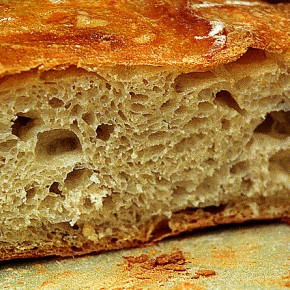
I’ve always been told that it’s the Anglo in me that craves bread and butter.  I like it soft, fragrant, and white.  A chewy crust.  Slathered with creamy (always salted) butter.  A large slice or two and it’s like I’ve been given a warm blanket and kiss on the forehead.  As a little girl, it was always my snack of choice.  One of my grandmas always had beautiful Italian buns waiting for me.  I remember a Dutch loaf from a Highlands bakery that was spongy and sweet.  One of my favourite parts of large family dinners was the basket of Safeway tray buns.  Baguettes in Vietnam hold a special place in my heart.  Even now, I’ll suggest the occasional excursion to the Old Spaghetti Factory just to have the cornetti bread. 


The process of making bread by hand with Sugar put me a little over the edge.  The kneading, the rising, the proofing, the baking…  I was as giddy as a school girl to see our loaves come out of the industrial oven.  The aroma from the oven hit me like pheromones.

Oh my.  I made that?


nait-bread-2-small


May I eat it now?  Hot and fresh?

No.

Our instructor told us that bread should be given 2 hours to rest before eating so that the flavours fully develop.

The good little students put their loaves in their bags and left the classroom to go home for the night.

Of course, cheating occurred.  And it was well worth it.

Even now, it’s hard for me to believe I made something SO good.  Dare I say that butter was hardly necessary?

I gifted one of my loaves to the hands of another; its mate was cut in half and placed in my freezer.


When might a half come out?

Stay tuned.


nait-bread-1-small


Basic White Bread By Hand


Remember, baking is a science.  It’s all based around percentages, so accuracy is important.  Ingredients should always be measured by weight, not volume.

This recipe makes 4 loaves that are approximately 625 g each.

In class, we cut the recipe in half.  Everything was done by hand—no mixers, no special tools.  Just the two Mother Nature gave you.


Bread flour*   1.4 kg

Water   950 g

Yeast (fresh)**   45 g

Salt   35 g

Sugar   35 g

Milk powder   30 g

Shortening   55 g


Blend milk powder into flour, then rub shortening through flour.

Dissolve sugar and salt in water.

Make a well in the flour.

Pour water mixture into well and crumble yeast into mixture

Slowly combine ingredients and mix until gluten window is formed.

Rise for 1 hour, punch back.  Rest another 15 minutes then round.  Rest another 15 minutes then form into loaf.

Put in loaf pan.

Proof*** for 1 hour.

Bake**** at 425 degrees F for approximately 30 minutes.


Don’t eat for 2 hours! 


*All purpose or whole wheat flour can be substituted.

**If using active dry yeast, use 40% of this amount.

***To proof:  Place a 9 x 13 pan in your oven full of boiling water.  Place the dough in with it.  Do not turn on oven… yet.

****To bake:  Keep the pan of water in with the bread until it turns golden.


Tags: ,